








Painting over nicotine stains: this is how you do it

Surfaces exposed to cigarette smoke will eventually show signs of nicotine stains and smell. Do you have to paint a room where people smoked for years? With the right products and approach, you can remove both the stains and the odour quickly, and, most importantly, keep them gone for good. 

A home or space where smoking takes place never comes out unscathed. Nicotine penetrates deeply into plaster, wall and ceiling panels, and porous paint layers. If you need to repaint yellowed walls or ceilings and want a stain-free result, it is important to know that you cannot just paint over them with any ordinary wall paint; the stains will eventually bleed through. You need to thoroughly clean the surface and use the right products.

1. The right product: Zinsser® B-I-N

Nicotine stains are more stubborn than you might think. The typical yellow-brown residue can penetrate deeply into surfaces and may even bleed through multiple layers of paint. The lingering smoke odour is also often difficult to remove. That is why you need a solution that effectively blocks both stains and odours. 

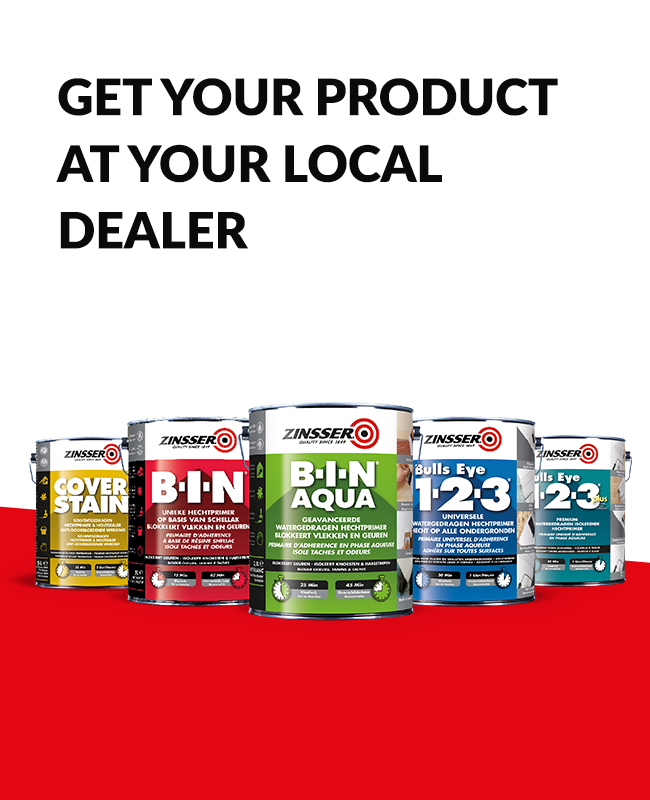
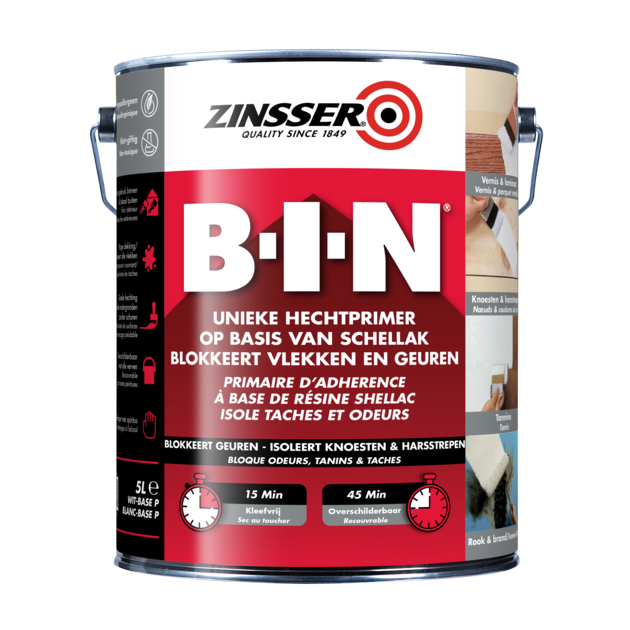
For surfaces affected by nicotine, Zinsser® B-I-N is the ideal solution. This fast-drying, single-component shellac-based primer blocks even the most persistent stains and odours. Thanks to its sealing power, it perfectly closes very porous surfaces, ensuring that your finishing coats are smooth and even. Moreover, its exceptional adhesion to even the most challenging materials also provides them with greater durability. For your topcoat, you can choose Zinsser® Allcoat Interior or PermaWhite®.

Zinsser® B-I-N

With Zinsser® B-I-N, you apply a stain- and odour-blocking primer to which your topcoat will adhere well.

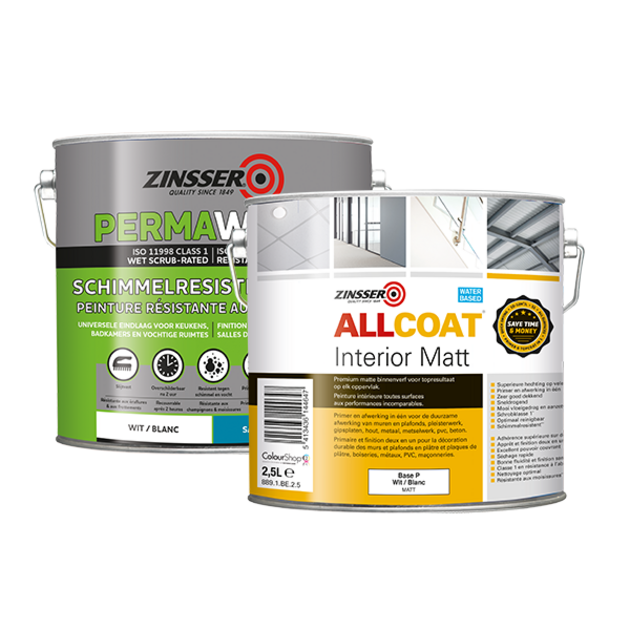
Zinsser® Allcoat Interior and PermaWhite®

Zinsser® Allcoat Interior and PermaWhite® are two possible finishes.

2. Preparing the substrate

Follow these steps to optimally prepare the yellowed substrate.

1. Clean the surface

Clean the substrate with Zinsser® Multi-Surface Degreaser & Cleaner. Rinse it with water and let it dry.

2. Sand the surface

Sand loose material with a stiff brush or other abrasives until you have a smooth surface. Sand the smooth edges with finer abrasives. Remove the dust.

3. Fill cracks (if present)

Are there any irregularities, fine cracks or tears in the surface? Fill these with a suitable filler or plaster in accordance with the manufacturer's instructions. Allow this to dry. Then sand the surface and remove all dust.

3. Priming the surface

Measure the moisture content of the surface with a moisture meter. Is it more than 12%? Then you cannot start priming yet and must first allow the surface to dry. Once you are below that 12%, you can get started.

1. Prepare the primer

Thoroughly mix the B-I-N. This will ensure a consistent colour and texture.

2. Apply the first coat

Apply the first coat. This is best done with a paintbrush. Allow the coat to dry for at least 45 minutes.

3. Apply the second coat (optional)

In extreme cases you can apply a second layer of B-I-N for better results. The primer is recoatable after 45 minutes.

4. Finishing the surface

To finish the surface, you can choose between Zinsser® Allcoat Interior or PermaWhite®. 

  • Allcoat Interior is a fast-drying, acrylic-based primer and topcoat in one. Thanks to its innovative formula, it adheres well to almost any surface inside, like wood, masonry, concrete, plasterboard and plaster.
  • If the surface is located in a damp area, you do well to choose PermaWhite® instead. This water-based primer and topcoat in one adheres well to smooth surfaces and prevents dirt from sticking and mould from growing.

1. Prepare the paint

Stir PermaWhite® or Allcoat Interior thoroughly. This will ensure a consistent colour and texture.

2. Apply the first coat

Apply the first coat. This is best done with a roller. Allow the coat to dry for at least 2 hours.

3. Apply the second coat

Apply a second coat. PermaWhite® is fully cured after 10 days, while Allcoat Interior is cured after just 7 days.

Conclusion

Surfaces affected by nicotine require a specific approach. Three factors are crucial: (1) stains must not bleed through over time, (2) odours need to be neutralised, and (3) the topcoat must adhere properly. With Zinsser® B-I-N you address all three challenges with a single product.

Want to know more about the recommended products?

ZINSSER® B-I-N

  • Fast drying
  • Superior adhesion to glossy surfaces
  • High-hiding formula blocks stubborn and persistent stains
  • Seals porous surfaces
  • Can be applied in freezing temperatures
  • Permanently blocks every kind of odor
  • Seals bleeding knots and sap streaks
  • Dried film is non-toxic and hypo-allergenic

ZINSSER® ALLCOAT INTERIOR MATT

  • Multi surface application.
  • Ultra durable formula.
  • Scuff & scrub resistant†
  • Mould & algae resistant coating
  • Streak-free finish.
  • High hiding.
  • No sanding needed.
  • Easy clean & washable

ZINSSER® PERMAWHITE SATIN

  • Protection of the dried coat against fungal degradation
  • Self-priming
  • Good adhesion on glossy and hard-to-paint surfaces
  • Easy application properties
  • Durable, washable, moisture resistant finish
  • Low odor
  • Fast drying
  • Excellent hiding power
  • Resists dirt pickup

ZINSSER® PERMAWHITE MATT

  • Protection of the dried coat against fungal degradation
  • Self-priming
  • Good adhesion on glossy and hard-to-paint surfaces
  • Easy application properties
  • Durable, washable, moisture resistant finish
  • Low odor
  • Fast drying
  • Excellent hiding power
  • Resists dirt pickup